Casino Payment Methods Australia 2026: What Actually Works Now
 Available in AU

The Australian online casino payment landscape shifted more in the past three years than in the previous decade. PayID went from niche curiosity to the default method at most offshore casinos. Several major banks now let customers block gambling transactions entirely. Skrill and Neteller withdrew from the Australian market. POLi shut down permanently.
If you last researched casino payments in 2022, half of what you knew is outdated.
This guide maps what actually works in 2026: which methods process deposits instantly, which deliver withdrawals in hours rather than days, where the bank blocks happen, and why some previously popular options no longer serve Australian players. Every speed claim and fee figure below comes from operator terms, payment provider documentation, or Australian banking policy as of 2026.
No fluff. No “it depends” conclusions. Specifics only.
Payment Methods for Australian Casino Players: 2026 Overview
Australian players fund casino accounts through five main categories: bank transfers, debit cards, e-wallets, prepaid vouchers, and cryptocurrency. Each category splits further into specific methods with different trade-offs.
Bank transfers include PayID (instant via the New Payments Platform), OSKO (same infrastructure, addressed differently), BPAY (slow legacy bill payment), and traditional wire transfers. PayID dominates this category — instant settlement, zero fees, accepted at 70% of offshore casinos serving Australians as of 2026. BPAY is functionally obsolete for real-time play. POLi, the screen-scraping instant bank payment method, shut down permanently in 2022.
Debit cards (Visa, Mastercard) remain familiar but face growing restrictions. NAB, CommBank, Westpac, and ANZ have implemented gambling transaction blocks on cards — either default-on or opt-in depending on account type and bank policy. When a card deposit is declined at a casino, the block typically sits on your bank’s side, not the casino’s. Card withdrawals take 2–5 business days when supported.
E-wallets saw a market shakeout. Skrill and Neteller (both owned by Paysafe Group) withdrew from Australian gambling in late 2022 to early 2023. ecoPayz (rebranded to Payz) exited in 2024. The e-wallets still serving Australian casino players in 2026 are MiFinity, Jeton, and eZeeWallet — all three FCA-authorised, all three processing deposits instantly and withdrawals typically under 24 hours.
Prepaid vouchers (Neosurf, paysafecard, CashtoCode) let you deposit a fixed amount bought at retail outlets — Coles, 7-Eleven, Australia Post, newsagents. Privacy-focused, budget-capped, and deposit-only. Withdrawals require a different method. Purchase fees run 4–7%.
Cryptocurrency (Bitcoin, Ethereum, Tether, Litecoin, others) delivers the fastest withdrawals available — often under two hours once the casino processes. Network fees vary by coin and congestion. Transactions over A$10,000 trigger AUSTRAC reporting requirements when converted to fiat at Australian exchanges. Volatility is a factor for BTC and ETH; Tether (USDT) is a stablecoin pegged to the US dollar for price stability.
The table below compares all five categories at a glance.
| Payment Category | Deposit Speed | Withdrawal Speed | Typical Fees | Best Use Case |
|---|---|---|---|---|
| Bank transfers (PayID/OSKO) | Instant (under 60 seconds) | Same day (under 4 hours common) | Zero | Most Australian players — speed without card details |
| Debit cards (Visa/Mastercard) | Instant when not blocked | 2–5 business days | Zero from casino; bank may charge 1–3% international fee | Familiarity; small first deposits |
| E-wallets (MiFinity/Jeton/eZeeWallet) | Instant | Under 24 hours | Zero to low; currency conversion fees apply | Regular players wanting a privacy buffer |
| Prepaid vouchers (Neosurf/paysafecard) | Instant | Not supported (deposit-only) | 4–7% purchase fee | Strict budgeting; privacy |
| Cryptocurrency (BTC/ETH/USDT/LTC) | 5–30 minutes | Often under 2 hours | Network fees ($1–$50+ depending on coin/congestion) | Crypto-comfortable players; fastest withdrawals |
Casino processing time comes before payment-method speed. An “instant withdrawal” casino processes your payout request within minutes. Most offshore operators take 24–72 hours to release funds before the payment method even starts moving money. Factor both timelines when comparing speeds.
What is the difference between PayID and BPAY for casino payments?
PayID uses the New Payments Platform for real-time bank-to-bank transfers addressed by mobile number or email, settling in under 60 seconds with 24/7 availability. BPAY is a legacy bill payment system processing in 1–2 business days during banking hours only. PayID replaced BPAY for casino use in 2026 due to speed and convenience.
PayID: Australia’s Go-To Casino Payment Method in 2026
PayID became the dominant Australian-specific casino payment method between 2024 and 2026 for one reason: it delivers instant bank-to-bank transfers without handing card details to offshore operators, and it kept working when major banks started blocking gambling transactions on cards.
The adoption curve was sharp. In 2022, PayID was a niche option at perhaps 20% of offshore casinos serving Australian players. By 2026, acceptance sits above 70%. Any casino targeting Australians without PayID support is leaving money on the table.
How PayID Works at Online Casinos
PayID is an addressing layer on top of Australia’s New Payments Platform, the real-time payment infrastructure launched in February 2018 and operated by Australian Payments Plus. Instead of entering a BSB and account number for a bank transfer, you send to a PayID — typically a mobile number, email address, or ABN linked to the recipient’s bank account.
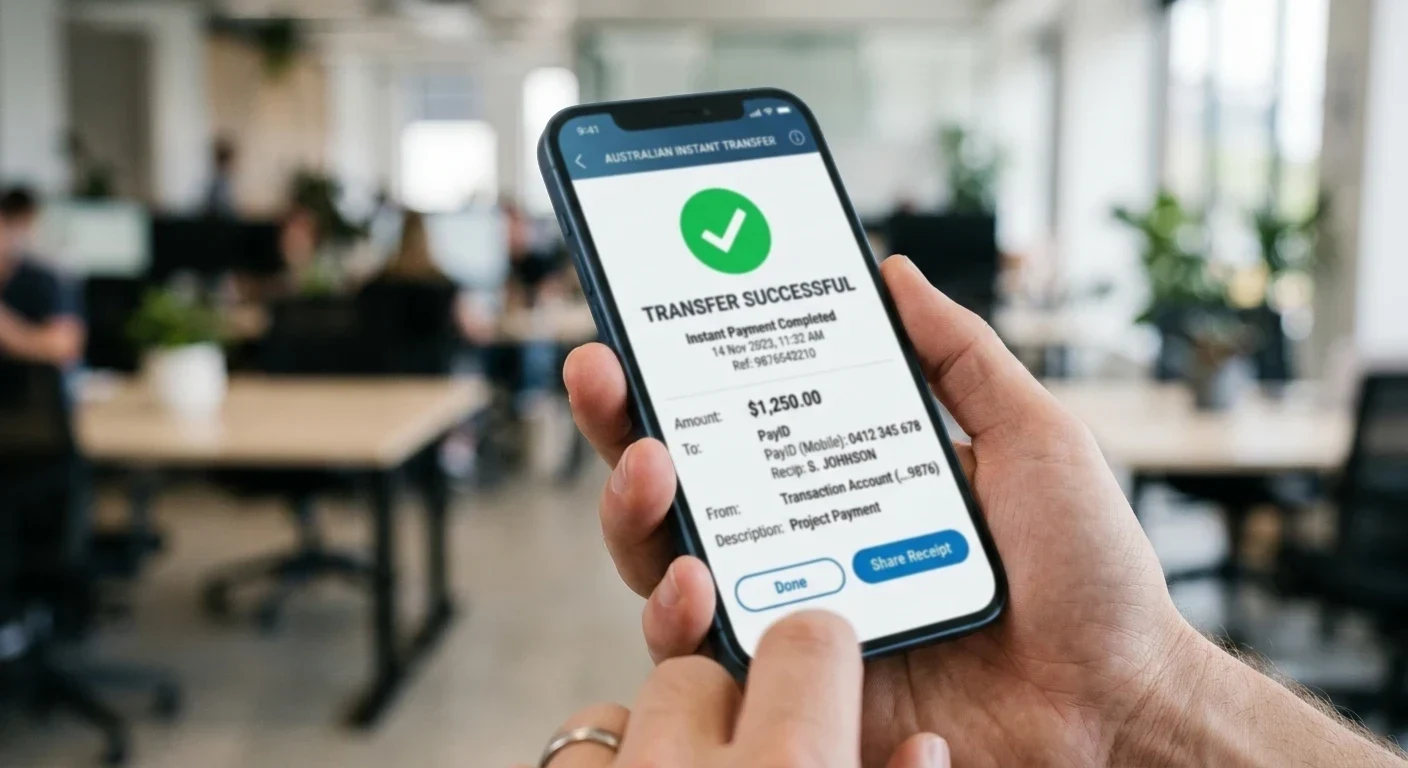
For casino deposits, the flow is straightforward. At the casino cashier, select PayID as your payment method. The casino displays its PayID (usually a mobile number or email). Open your banking app, initiate a transfer to that PayID, enter the amount, and confirm. The transfer settles in real-time — usually under 60 seconds. Your casino balance updates automatically once the payment arrives.
The infrastructure runs 24/7. A PayID deposit at 2am on Sunday processes just as fast as one at 10am on Wednesday. No business-hours delay, no weekend hold.
Security comes from two angles. First, Confirmation of Payee: before you send, your banking app shows the recipient’s name registered to that PayID. If the name doesn’t match the casino you expect, stop. Second, bank-level encryption protects the transfer itself. PayID doesn’t introduce a third party — the money moves directly between your bank and the casino’s Australian bank account or payment processor.
PayID Deposit and Withdrawal Speeds
Deposits via PayID are instant in practice. The New Payments Platform settles in seconds. Most players see their casino balance update within 60 seconds of confirming the transfer in their banking app. Rare delays stretch to two or three minutes during peak NPP traffic, but sub-minute settlement is the norm.
Withdrawals depend on two variables: casino processing time and PayID settlement. Fast-payout casinos process withdrawal requests within minutes to a few hours, then release the PayID transfer. Once released, the money hits your bank account in real-time — same sub-60-second settlement as deposits.
Operators advertising “same-day PayID withdrawals” typically mean this: if you request a withdrawal in the morning, they process it by afternoon, and the money lands in your account that evening. Under-4-hour total turnaround is common at the faster offshore operators. Slower casinos take 24–72 hours to process before releasing the PayID payment; the PayID leg itself remains instant.
PayID Limits and Bank Restrictions
Casino-side limits on PayID deposits typically start at A$10 minimum. Maximum deposits per transaction vary by operator — A$1,000 to A$10,000 is the common range. Some casinos impose daily deposit caps; others have no upper limit beyond what your bank allows.
Bank-side limits matter more. Your daily transfer limit is set by your own bank, not the casino. Commonwealth Bank, NAB, Westpac, and ANZ commonly set default daily PayID transfer limits between A$1,000 and A$10,000 depending on account type and whether you’ve requested a higher limit. Business accounts often have higher caps. Check your banking app or contact your bank to confirm your specific daily limit before attempting a large deposit.
If you hit your daily transfer limit mid-session, you cannot deposit more until the limit resets (usually midnight). Splitting a large deposit across multiple smaller transfers within your limit works, but each transfer counts toward your daily cap.
PayID transfers appear on your bank statement as standard transfers, showing the recipient name (the casino or its payment processor). There is no anonymity here. If someone reviews your bank statement, they will see the transaction. This is the trade-off for speed and directness.
One more friction point: not all Australian banks participate in the New Payments Platform yet. All major banks (Commonwealth, NAB, Westpac, ANZ, Bendigo, Macquarie, ING, and 60+ others) support PayID as of 2026, but small regional banks and credit unions may not. If your bank doesn’t support NPP, PayID deposits won’t work for you.
Is PayID safe to use at offshore casinos?
PayID itself is secure — it’s bank-to-bank infrastructure regulated by the Reserve Bank of Australia with Confirmation of Payee verification. The risk sits with the casino, not the payment method. Only use PayID at offshore casinos with valid licenses (Curacao, Malta, Gibraltar) and verified payout records. Check reviews before depositing. PayID offers no chargeback mechanism, so vet the operator first.
Top PayID Casinos for Australian Players
Most offshore casinos serving Australian players added PayID support between 2024 and 2026. The operators below process PayID deposits instantly and handle withdrawals faster than the offshore average.
BitStarz accepts PayID deposits from A$20, processes withdrawals within 1–2 hours for verified accounts, and operates under a Curacao license. The site has been running since 2014 — one of the older names still accepting Australian players. Crypto is faster here, but PayID works reliably for players preferring AUD transactions.
JustCasino sets PayID minimums at A$10 for deposits. Withdrawal processing runs under 4 hours on average for PayID requests. The platform supports around 5,000 games from major providers and holds a Curacao license.
Sportuna Casino processes PayID withdrawals within 6 hours typical, accepts deposits from A$10, and offers crypto alongside PayID for players wanting options. Licensed in Curacao, operating since late 2023.
PayID acceptance is now standard rather than a differentiator. When comparing casinos, focus on withdrawal processing speed (how fast they release your payout request) rather than whether they accept PayID — most do.
Debit Cards: Visa and Mastercard at Australian Casinos
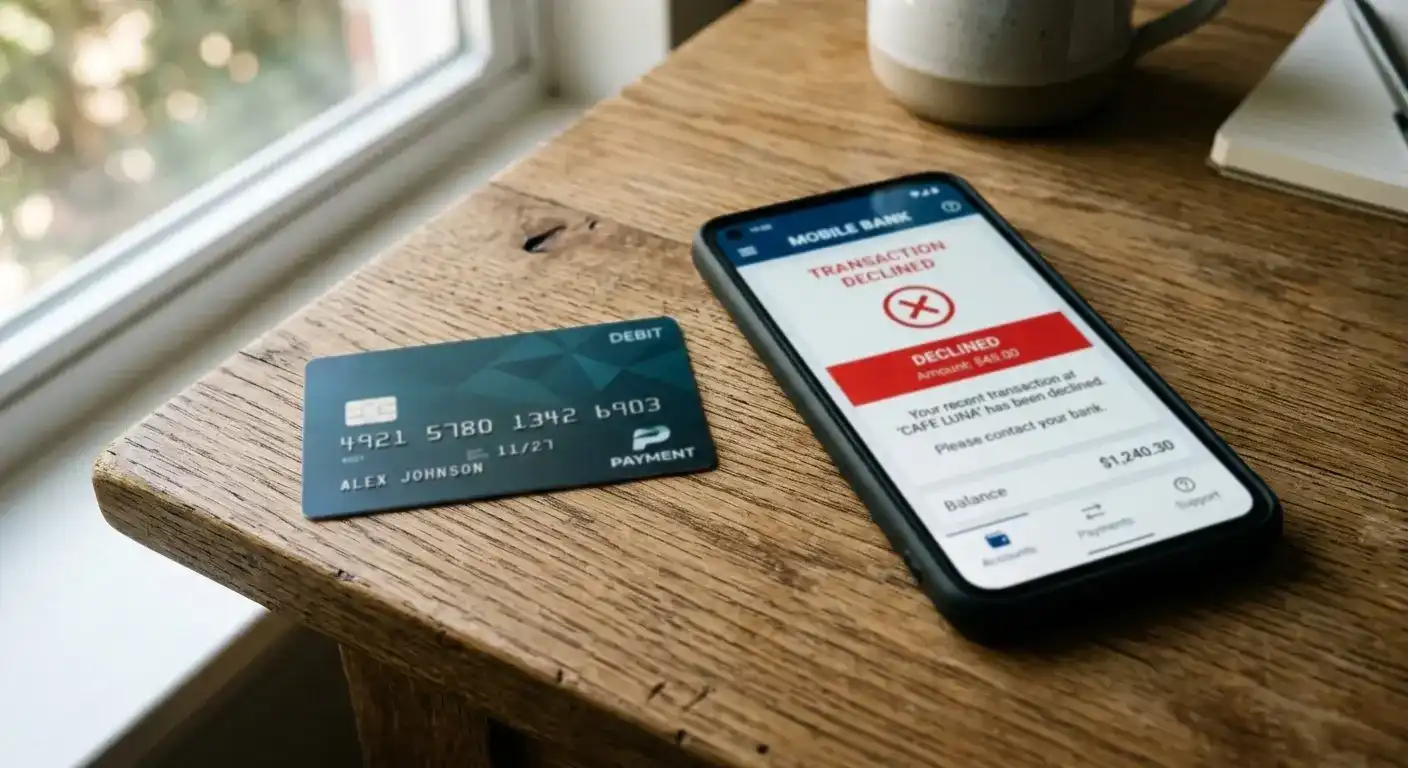
Debit cards remain the most familiar payment method globally, but their utility for Australian casino players declined sharply between 2024 and 2026. The reason sits on the bank side, not the casino side: major Australian banks now block or restrict gambling transactions coded with merchant category code 7995.
If a Visa or Mastercard deposit fails at a casino, check your bank’s policy before blaming the operator.
Visa Debit Casino Deposits and Withdrawals
Visa debit cards issued by Australian banks work at most offshore casinos — when the bank allows the transaction through. Deposits process instantly if not blocked. You enter your card details at the casino cashier, authorise the payment, and the funds appear in your casino balance within seconds.
The catch: a growing number of Australian banks either block gambling merchant codes by default or offer customers a voluntary gambling block feature. If your bank has activated a gambling block on your card (whether you requested it or the bank set it as default), casino deposits will be declined at authorisation. The transaction never reaches the casino — your bank stops it before it leaves.
Visa itself doesn’t block gambling transactions. Visa is a payment network; the issuing bank (your bank) makes the block decision. A Visa debit card from one Australian bank might work fine at casinos while the same Visa debit from another bank is blocked entirely.
Withdrawals via Visa debit take 2–5 business days once the casino processes the payout. Some offshore operators don’t support card withdrawals at all — they’ll refund your original deposit amount to the card and require a different method (PayID, e-wallet, crypto) for the winnings. Check the casino’s withdrawal terms before depositing.
International transaction fees are common. If the offshore casino processes the transaction in USD or EUR rather than AUD, your Australian bank may charge a currency conversion fee — typically 1–3% of the transaction amount. This applies to both deposits and withdrawals. Check your card’s fee schedule.
Mastercard Debit for Australian Players
Mastercard debit cards face the same restrictions as Visa. Instant deposits when the transaction goes through. Same gambling merchant-code blocks from Australian banks. Same 2–5 business day withdrawal timeframe. Same international transaction fees when currency conversion occurs.
Acceptance at offshore casinos is comparable to Visa — most operators take both. A small number of casinos accept Visa but not Mastercard, or vice versa, but that’s rare. If an offshore casino lists “cards” as a payment method, assume both Visa and Mastercard work unless stated otherwise.
Which Australian Banks Block Casino Transactions
As of 2026, the four major Australian banks handle gambling transactions differently:
NAB (National Australia Bank) implemented a default gambling block on most personal debit and credit cards in 2024. Customers can disable the block by contacting NAB, but the default position is “block gambling transactions.” If you hold an NAB-issued card and your casino deposit is declined, this is likely why.
CommBank (Commonwealth Bank of Australia) offers a voluntary gambling block that customers can activate through the CommBank app or by contacting the bank. It’s opt-in, not default-on. If you’ve never activated the gambling block, your CommBank card should work at casinos (subject to the casino accepting it). If you previously activated the block, you’ll need to disable it before deposits will go through.
Westpac rolled out a similar voluntary gambling block feature in late 2023 and expanded it through 2024. Opt-in via the Westpac app or customer service. Default position for most accounts is “gambling transactions allowed,” but check your specific account settings if deposits fail.
ANZ (Australia and New Zealand Banking Group) introduced gambling-block options for customers in 2024. Like CommBank and Westpac, it’s opt-in rather than default-on for most account types. If you requested the block previously, you’ll need to remove it before casino deposits will process.
Smaller banks and credit unions vary. Some have no gambling blocks at all; others implemented default-on restrictions similar to NAB. If your card is declined at multiple casinos, contact your bank directly and ask whether they block merchant category code 7995 (gambling) on your account.
One workaround exists: some offshore casinos route card transactions through non-gambling merchant codes to bypass bank blocks. This is operator-dependent and not advertised. If a card deposit goes through despite your bank’s gambling block, the casino likely coded the transaction as something else. Whether this is reliable long-term is questionable — banks update their detection algorithms regularly.
Do Australian banks block online casino deposits, and which banks are affected?
Yes. NAB blocks gambling transactions by default on most cards (customer can disable). CommBank, Westpac, and ANZ offer opt-in gambling blocks that customers can activate. If you’ve enabled a block or hold an NAB card, casino deposits will be declined. Contact your bank to check your account’s gambling-block status and disable it if needed.
Can I use a credit card at Australian online casinos?
Most offshore casinos accept credit cards (Visa, Mastercard), but the same bank-side gambling blocks apply. Additionally, using credit for gambling is borrowing to gamble — higher risk. Many Australian banks apply stricter restrictions to credit cards than debit cards for gambling transactions. Debit is the safer choice for bankroll control.
Amex at Online Casinos (Why Acceptance Is Rare)
American Express cards have minimal acceptance at offshore casinos serving Australian players. Under 10% of operators accept Amex as of 2026. The reason is merchant fees — Amex charges higher processing fees to merchants than Visa or Mastercard, and most offshore casinos prefer to avoid that cost.
If you hold an Amex card as your only card, expect to use a different payment method (PayID, e-wallet, crypto) for casino deposits. Rare operators accept Amex, but don’t rely on it.

E-Wallets for Australian Casino Players
The e-wallet landscape serving Australian casino players shrank significantly between 2022 and 2024. Three major providers — Skrill, Neteller, and ecoPayz — withdrew from the Australian gambling market entirely. The e-wallets still accepting Australian players in 2026 are MiFinity, Jeton, and eZeeWallet.
If a casino payment guide still lists Skrill or Neteller as viable options for Australians, it’s outdated.
MiFinity: The E-Wallet That Stayed
MiFinity Limited is a UK-registered payment company authorised by the Financial Conduct Authority (FCA reference number 900564) to issue e-money and provide payment services. Launched in 2017, MiFinity operates an e-wallet and prepaid card system targeting online gambling customers globally, including Australians.
The e-wallet supports over 30 currencies including AUD. Deposits at casinos process instantly. Withdrawals from casinos to your MiFinity account typically complete within 24 hours, often faster. Once in your MiFinity wallet, you can withdraw to a linked bank account, use the MiFinity Go prepaid Mastercard for purchases or ATM withdrawals, or leave the funds in the wallet for future deposits.
MiFinity charges a currency conversion fee of approximately 3% when you hold a non-EUR balance. If you deposit AUD to a casino, withdraw winnings back to MiFinity in AUD, and later convert to another currency, expect that fee. Keeping everything in AUD minimises fees. The wallet also charges a €5 monthly inactivity fee after 13 months without transactions — not a factor for regular players, but worth noting if you plan to leave funds dormant.
Casino acceptance sits around 40–50% of offshore operators serving Australian players as of 2026. MiFinity didn’t exit the Australian market when Skrill and Neteller did, which gave it a competitive advantage — casinos needed e-wallet alternatives and MiFinity filled the gap.
Account verification (KYC) happens at the MiFinity level. Upload photo ID and proof of address to MiFinity once; after that, casino deposits and withdrawals using MiFinity are smoother because the e-wallet already verified your identity. Some casinos still require their own KYC, but others accept MiFinity’s verification as sufficient.
What Happened to Skrill, Neteller, and ecoPayz
Skrill and Neteller are both owned by Paysafe Group (formerly Optimal Payments, acquired by Blackstone and later merged with Foris DAX). In late 2022 to early 2023, Paysafe made a corporate decision to withdraw both Skrill and Neteller from the Australian online gambling market. No public explanation was given beyond “business reasons.” Existing Skrill and Neteller users in Australia can still hold accounts, but they cannot fund offshore casino accounts or withdraw casino winnings to these wallets.
The withdrawal was simultaneous and deliberate. One quarter both services worked for Australian casino players; the next quarter neither did. Casinos that previously accepted Skrill and Neteller for Australian deposits removed both options or blocked Australian accounts from using them.
ecoPayz (rebranded to Payz in 2022) is a separate e-wallet operated by PSI-Pay Ltd, a UK company also authorised by the FCA. ecoPayz exited the Australian gambling market in 2024. The timeline was slower than Skrill/Neteller but the outcome was the same: Australian players can no longer deposit at casinos or withdraw casino winnings via Payz as of 2026.
The exits created a gap. Skrill and Neteller were market leaders — many Australian players relied on them for casino transactions. When they disappeared, players migrated to MiFinity, Jeton, eZeeWallet, PayID, and crypto. The gap accelerated PayID’s adoption more than any single factor.
What happened to POLi, Skrill, and Neteller for Australian casino players?
POLi (instant bank transfer via screen-scraping) shut down permanently in 2022 due to security and liability concerns. Skrill and Neteller (both Paysafe-owned) withdrew from Australian gambling in late 2022 to early 2023 by corporate decision. All three no longer serve Australian casino players. PayID replaced POLi functionally; MiFinity and crypto replaced Skrill/Neteller.
Jeton and eZeeWallet Alternatives
Jeton is a Cyprus-based e-wallet supporting AUD among other currencies. Instant casino deposits, withdrawals typically under 24 hours. Jeton charges a monthly inactivity fee of €2 after 12 months without transactions. Currency conversion fees apply when moving between currencies. Casino acceptance is lower than MiFinity — perhaps 20–30% of offshore operators serving Australians accept Jeton as of 2026, but it’s growing.
Jeton Wallet requires KYC verification (photo ID, proof of address). Once verified, casino transactions are streamlined. The Jeton Card (prepaid Mastercard) allows ATM withdrawals and purchases using wallet balance.
eZeeWallet targets the Australian and New Zealand markets specifically. Instant deposits at casinos, fast withdrawals (often same-day), and AUD support with minimal fees. Casino acceptance is comparable to Jeton — around 20–30% of offshore operators. eZeeWallet’s advantage is its regional focus: customer service understands Australian banking nuances, and AUD is a primary currency rather than an afterthought.
Verification requirements are standard (ID, proof of address). No monthly inactivity fees reported as of 2026, but check current terms before opening an account.
E-Wallet Fees and Processing Times
E-wallet deposits at casinos are instant across all three active providers (MiFinity, Jeton, eZeeWallet). You fund your e-wallet via bank transfer or card, then use the wallet balance to deposit at the casino. The casino deposit step takes seconds.
Withdrawals from casinos to your e-wallet typically complete within 24 hours, often faster. Once in your e-wallet, moving money to your bank account adds another 1–3 business days depending on the e-wallet provider and your bank. Total turnaround from “request casino withdrawal” to “money in bank account” is usually under 48 hours at fast-payout casinos.
Fees vary by provider and transaction type. Funding your e-wallet from an Australian bank account is often free or low-cost. Casino deposits from the e-wallet to the casino are typically free. Withdrawing from the casino to your e-wallet is free. Withdrawing from the e-wallet to your bank account may incur a small fee (check your e-wallet’s current schedule). Currency conversion fees hit when you move between currencies.
The privacy benefit: casinos see your e-wallet account, not your bank details or card number. Your bank sees a transfer to the e-wallet provider, not to an offshore casino. This layer of separation is why some players prefer e-wallets despite the extra account to manage.
| E-Wallet | Status | Exit Date (if applicable) | Current AU Availability |
|---|---|---|---|
| MiFinity | Active | — | Yes |
| Jeton | Active | — | Yes |
| eZeeWallet | Active | — | Yes |
| Skrill | Exited | Q4 2022 – Q1 2023 | No |
| Neteller | Exited | Q4 2022 – Q1 2023 | No |
| ecoPayz (Payz) | Exited | 2024 | No |
Prepaid Vouchers: Neosurf and paysafecard
Prepaid vouchers let you deposit at casinos without sharing bank details or card numbers. Buy a voucher for a fixed amount at a retail outlet, receive a PIN code, enter that code at the casino cashier. The casino balance updates instantly. No bank account required, no card involved, and you literally cannot overspend — once the voucher amount is gone, that’s it.
The limitation is absolute: vouchers are deposit-only. Withdrawals require a different method (PayID, e-wallet, crypto, card). You cannot withdraw casino winnings to a voucher.
Neosurf Casino Vouchers: Where to Buy and How to Use
Neosurf is a French prepaid voucher system operated by Neosurf SAS, founded in 2004 and headquartered in Paris. The company operates in over 50 countries including Australia. Australian voucher availability expanded significantly between 2020 and 2026 — Neosurf is now sold at Coles supermarkets, 7-Eleven stores, Australia Post outlets, newsagents, and many independent retailers.
Voucher denominations in Australia are A$10, A$20, A$50, A$100, and A$250. You buy the voucher amount you need. The retailer charges a purchase fee on top of the voucher value — typically 4–5% depending on outlet and denomination. A $100 voucher costs roughly $104–$105 at the register.
Each voucher has a unique 10-digit PIN code. To deposit at a casino, select Neosurf at the cashier, enter the PIN, and specify the amount you want to deposit (up to the voucher balance). The deposit processes instantly. If your voucher holds $100 and you deposit $50 at a casino, the remaining $50 stays on the voucher for another deposit.
Neosurf vouchers expire 12 months after purchase. The myNeosurf online account system lets you combine multiple vouchers into one balance and track expiry dates. Without a myNeosurf account, keep the physical voucher PIN secure — anyone with the code can use it.
Casino acceptance sits around 50–60% of offshore operators serving Australian players as of 2026. Neosurf is more common than paysafecard at AU-facing casinos, likely due to better Australian retail distribution.
The privacy angle: you walk into Coles, pay cash, walk out with a voucher. No bank sees the transaction. The casino sees a Neosurf deposit code, not your identity (though KYC verification will happen on withdrawal — you cannot withdraw anonymously even if you deposited anonymously). This appeals to players who want to limit their gambling footprint in their banking history.
paysafecard for Australian Players
paysafecard is an Austrian prepaid voucher system launched in 2000 and acquired by Paysafe Group in 2013 (the same parent company that owns Skrill and Neteller). paysafecard operates in 50+ countries including Australia, sold at newsagents, service stations, and some retail chains.
Australian denominations are A$15, A$30, A$50, A$75, A$100, A$150, and A$250. Purchase fees run 5–7%, slightly higher than Neosurf. Each voucher has a 16-digit PIN code. To deposit at a casino, enter the PIN at the cashier. Instant deposit. Partial redemption works the same as Neosurf — use part of the voucher now, the rest later.
paysafecard vouchers expire 12 months after purchase. The my paysafecard online account lets you manage multiple vouchers and combine balances.
Casino acceptance is lower than Neosurf in Australia — around 40–50% of offshore operators accept paysafecard as of 2026. The gap widened after Paysafe’s decision to pull Skrill and Neteller from Australian gambling. Some casinos that dropped Skrill/Neteller also removed paysafecard, possibly fearing Paysafe would exit entirely. That hasn’t happened yet, but paysafecard’s Australian casino footprint shrank noticeably in 2023–2024.
Voucher Fees, Limits, and Expiry
The fee structure for prepaid vouchers front-loads costs. You pay a purchase fee (4–7%) when buying the voucher at the retailer. The casino doesn’t charge a deposit fee on top of that. Withdrawals aren’t supported, so there’s no withdrawal fee to worry about for this method — your withdrawal fee is whatever method you choose as your withdrawal route.
Minimum casino deposits via voucher typically match the smallest voucher denomination: A$10 for Neosurf, A$15 for paysafecard. Maximum deposits are capped by the largest voucher (A$250 for both) unless you combine multiple vouchers using the provider’s online account system. Many casinos cap voucher deposits at $250–$500 per transaction even if you combine vouchers.
Expiry matters. A voucher purchased in January 2026 expires in January 2026 + 1 year. If you forget about a voucher in a drawer, the balance is forfeited. Set reminders or use the myNeosurf / my paysafecard accounts to track expiry.
| Voucher | Denominations (AUD) | Purchase Locations | Purchase Fee | Expiry Period |
|---|---|---|---|---|
| Neosurf | $10, $20, $50, $100, $250 | Coles, 7-Eleven, Australia Post, newsagents | ~4–5% | 12 months |
| paysafecard | $15, $30, $50, $75, $100, $150, $250 | Newsagents, service stations | ~5–7% | 12 months |
| CashtoCode | Varies | Limited AU availability | ~4–6% | Varies |
The Withdrawal Problem: Why You Need a Second Method
Prepaid vouchers are strictly one-way. You can load money into a casino, but you cannot pull money out via the same voucher. When you request a withdrawal from a casino where you deposited with Neosurf or paysafecard, the casino will ask for a different withdrawal method: PayID, e-wallet, crypto, bank transfer, or card.
This creates a KYC friction point. Casinos impose stricter identity verification on players who deposit via vouchers and request withdrawal via a different method. The logic from the casino’s side: vouchers are anonymous at deposit (no name attached to the PIN), so the casino wants to verify who is actually withdrawing before releasing funds. Expect to upload photo ID, proof of address, and sometimes proof of your withdrawal method (bank statement showing your name and account, or e-wallet verification) before the first voucher-funded withdrawal is approved.
Processing time for that first withdrawal stretches longer than subsequent withdrawals. Once verified, future withdrawals are smoother, but the initial KYC check can take 24 hours to several days depending on the casino’s compliance team workload.
Players using vouchers for privacy should understand the limitation: you can deposit anonymously, but you cannot withdraw anonymously. The moment you request a payout, your identity is on file.
Cryptocurrency Casino Payments in Australia
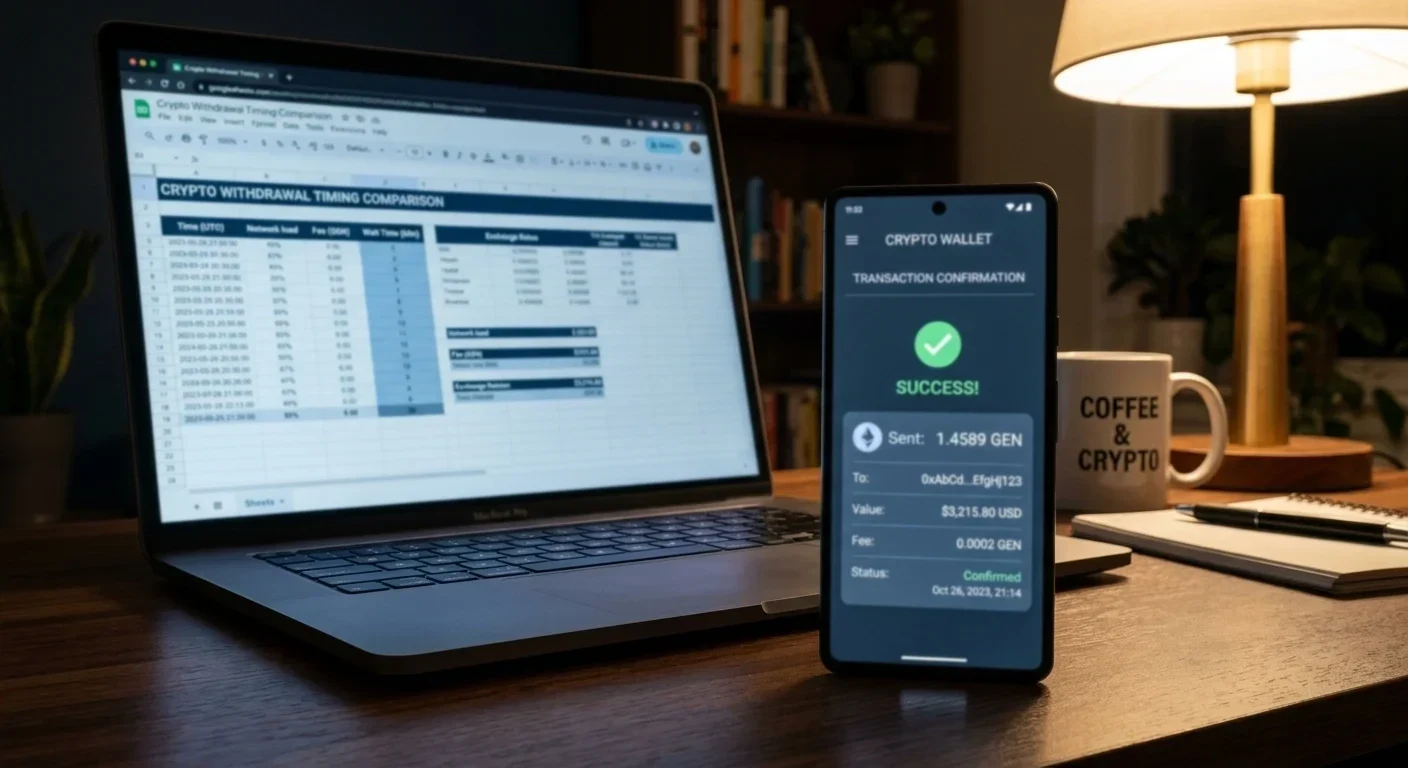
Cryptocurrency delivers the fastest casino withdrawals available to Australian players in 2026. Once a casino processes your payout request, crypto withdrawals typically land in your wallet within two hours, often within 30 minutes. No bank intermediary, no business-hours delay, no 2-5 day card processing window.
The trade-off: you need a crypto wallet, you pay network fees, and if you hold volatile coins like Bitcoin or Ethereum, your bankroll’s value fluctuates between sessions. Stablecoins like Tether (USDT) solve the volatility problem by pegging to the US dollar.
Around 60–70% of offshore casinos serving Australian players accept cryptocurrency as of 2026. Bitcoin is the most widely accepted. Ethereum, Tether, and Litecoin follow. Acceptance of newer coins like Solana and Bitcoin Cash varies by operator.
Bitcoin (BTC): The Crypto Casino Standard
Bitcoin launched in January 2009 as the first decentralized cryptocurrency. It remains the most recognised and most widely accepted crypto at online casinos — if a casino accepts any crypto at all, it accepts Bitcoin.
Casino deposits via Bitcoin take 10–30 minutes on average, the time needed for blockchain confirmation. Bitcoin’s average block time is 10 minutes, and most casinos require 1–3 confirmations before crediting your account. During network congestion, deposits can stretch to 45–60 minutes. When the Bitcoin network is quiet, deposits confirm in under 15 minutes.
Withdrawals are where Bitcoin shines. Fast-payout casinos process crypto withdrawals within 1–2 hours, sometimes under 30 minutes. Once the casino releases the Bitcoin transaction to the blockchain, it reaches your wallet in the next block — typically 10–30 minutes. Total turnaround from “request withdrawal” to “Bitcoin in wallet” often runs under two hours at the fastest offshore operators.
Network fees vary with blockchain congestion. During quiet periods, Bitcoin transaction fees drop to $1–$5. During 2024–2025 congestion spikes, fees hit $50+ per transaction. Check current network fees before depositing or withdrawing — mempool.space shows real-time fee estimates.
Price volatility is Bitcoin’s main drawback for gambling. A $1,000 deposit might be worth $950 or $1,050 by the time you withdraw, depending on Bitcoin’s price movement that day. Intraday swings of ±3–5% are common. If this bothers you, use a stablecoin like Tether instead.
AUSTRAC (Australian Transaction Reports and Analysis Centre) requires Australian cryptocurrency exchanges to register as Digital Currency Exchange providers. When you convert Bitcoin to Australian dollars at an exchange like CoinSpot, Swyftx, or BTC Markets, transactions over A$10,000 trigger AUSTRAC reporting requirements under anti-money-laundering and counter-terrorism-financing laws. The exchange reports the transaction to AUSTRAC; AUSTRAC doesn’t notify you directly, but the exchange is legally required to file. This applies to fiat conversion, not wallet-to-wallet transfers.
Ethereum (ETH): Smart Contracts and Fast Confirmations
Ethereum launched in July 2015 as a smart-contract blockchain. Its native cryptocurrency, Ether (ETH), is the second-largest crypto by market cap after Bitcoin. Casino acceptance sits around 50–60% of offshore operators serving Australians as of 2026.
Ethereum’s average block time is 12 seconds, significantly faster than Bitcoin’s 10 minutes. Casino deposits via Ethereum typically confirm in 5–20 minutes depending on network congestion and how many confirmations the casino requires. Withdrawals follow the same speed pattern as Bitcoin: fast-payout casinos release ETH within 1–2 hours, and the blockchain transfer completes in minutes.
Network fees on Ethereum (called “gas fees”) vary dramatically with network congestion. During quiet periods, gas fees run $2–$10 per transaction. During peak congestion (often driven by NFT mints, DeFi activity, or market volatility), gas fees have spiked above $100 per transaction. Ethereum’s fee volatility is higher than Bitcoin’s. Check current gas prices at etherscan.io before transacting.
Ethereum’s advantage for casinos is smart-contract functionality. Some offshore operators use Ethereum smart contracts for provably fair games — the game logic runs on-chain, verifiable by anyone. Bitcoin doesn’t support complex smart contracts, so Ethereum enables game types Bitcoin cannot.
Price volatility matches Bitcoin’s patterns: ±3–5% daily swings are normal, with occasional larger moves during market events. Same AUSTRAC reporting applies when converting ETH to AUD at Australian exchanges over the A$10,000 threshold.
Tether (USDT): Stablecoin for Price Stability
Tether is a stablecoin issued by Tether Limited (Hong Kong-registered company) and pegged 1:1 to the US dollar. One USDT equals approximately one USD, maintained through reserves held by Tether Limited. The stablecoin operates on multiple blockchains — Ethereum, Tron, Solana, and others. Tron-based USDT (TRC-20) is the most common at casinos due to low fees and fast confirmation.
The key difference from Bitcoin and Ethereum: Tether doesn’t fluctuate in price against the dollar. If you deposit $1,000 worth of USDT and play for three hours, your remaining balance is still worth close to $1,000 regardless of what Bitcoin or Ethereum did during that time. The exchange rate you care about is USD/AUD, which moves much slower than crypto volatility.
Casino acceptance is around 50–60% of offshore operators as of 2026. Operators accepting crypto typically list USDT alongside BTC and ETH. Minimum deposits are usually $10–$20 USDT.
Tron-based USDT deposits confirm in under 5 minutes typically — Tron’s block time is 3 seconds, and most casinos require just a few confirmations. Network fees on Tron are negligible, often under $1 per transaction. Ethereum-based USDT deposits take longer (5–20 minutes) and cost more in gas fees ($5–$100+ depending on congestion). When depositing USDT at a casino, check which blockchain the casino uses. If they accept both Tron and Ethereum, choose Tron for speed and cost.
Withdrawals via USDT are just as fast as Bitcoin once the casino processes them. Total turnaround under two hours is common at fast-payout operators.
Tether Limited has faced controversies about reserve transparency and regulatory compliance since 2017. In 2021, Tether settled with the U.S. Commodity Futures Trading Commission and paid a $41 million fine, agreeing to provide reserve attestations. As of 2026, Tether publishes quarterly reserve reports. The market cap exceeds $80 billion, making it the largest stablecoin by significant margin. Players uncomfortable with Tether’s corporate history can use USDC (USD Coin) instead, though casino acceptance of USDC is lower.
Litecoin (LTC): Low Fees and Fast Transfers
Litecoin launched in October 2011 as a Bitcoin alternative designed for faster transactions and lower fees. Created by Charlie Lee (former Google engineer), Litecoin is often described as “silver to Bitcoin’s gold” — similar technology, smaller market cap, faster block times.
Litecoin’s average block time is 2.5 minutes, four times faster than Bitcoin’s 10 minutes. Casino deposits via Litecoin typically confirm in 10–20 minutes. Withdrawals follow the same pattern: fast-payout casinos release LTC within 1–2 hours, and the blockchain transfer completes in minutes.
Network fees are Litecoin’s main advantage. Transaction fees consistently run under $1, often $0.05–$0.50 per transaction. Even during network congestion, Litecoin fees rarely exceed a few dollars. For players making frequent small deposits and withdrawals, Litecoin’s fee structure is significantly cheaper than Bitcoin or Ethereum.
Casino acceptance is around 40–50% of offshore operators serving Australians as of 2026. Lower than Bitcoin, higher than newer altcoins. Minimum deposits are typically 0.1 LTC (roughly $10–$15 AUD at 2026 exchange rates).
Price volatility tracks Bitcoin’s trends but with a lower market cap, Litecoin can see sharper percentage swings. Same AUSTRAC reporting applies at $10,000+ AUD conversions.
Bitcoin Cash, Solana, and Other Altcoins
Bitcoin Cash (BCH) split from Bitcoin in August 2017 following a blockchain fork. Faster block times and larger block sizes than Bitcoin. Casino acceptance around 30–40% of offshore operators. Network fees comparable to Litecoin (under $1 typical). Less liquidity at Australian exchanges than Bitcoin or Ethereum.
Solana (SOL) is a high-speed blockchain launched in 2020. Block time under 1 second, extremely low fees (fractions of a cent per transaction). Casino acceptance growing but still under 20% of offshore operators as of 2026. Popular among players wanting the fastest possible deposits and withdrawals. Price volatility higher than Bitcoin due to smaller market cap and newer technology.
Other altcoins (Dogecoin, Ripple, Cardano, Polygon) appear at a small number of offshore casinos but acceptance is inconsistent. Stick to Bitcoin, Ethereum, Tether, or Litecoin for reliable acceptance across operators.
Crypto Fees, Speeds, and AUSTRAC Reporting
Network fees are paid to blockchain miners or validators, not to the casino. The casino doesn’t charge a deposit or withdrawal fee for crypto transactions — you pay the network fee only. This is set by supply and demand on the blockchain at the time of your transaction.
Deposit and withdrawal speeds depend on three factors: blockchain congestion (how busy the network is), block time (how fast the blockchain confirms transactions), and casino processing speed (how fast the operator releases your withdrawal). The blockchain leg is predictable; the casino processing leg varies by operator.
AUSTRAC reporting applies when you convert cryptocurrency to Australian dollars at an Australian exchange. Transactions over A$10,000 are reportable under AML/CTF laws. Wallet-to-wallet transfers (your wallet to casino, casino to your wallet) are not reportable. Only fiat conversion triggers the requirement. International exchanges not registered in Australia don’t report to AUSTRAC, but using unregistered exchanges creates its own risks (no Australian consumer protection, no regulatory recourse if funds are frozen or lost).
| Cryptocurrency | Deposit Speed | Withdrawal Speed | Network Fees | Volatility | Casino Acceptance (AU) |
|---|---|---|---|---|---|
| Bitcoin (BTC) | 10–30 min | Under 2h typical | $1–$50+ (congestion-dependent) | High (±3–5% daily) | 60–70% |
| Ethereum (ETH) | 5–20 min | Under 2h typical | $2–$100+ (gas fees vary) | High (±3–5% daily) | 50–60% |
| Tether (USDT) | Under 5 min (Tron) | Under 2h typical | Under $1 (Tron) | Stable (~$1 USD) | 50–60% |
| Litecoin (LTC) | 10–20 min | Under 2h typical | Under $1 typical | Moderate (tracks BTC) | 40–50% |
| Bitcoin Cash (BCH) | 10–20 min | Under 2h typical | Under $1 typical | Moderate | 30–40% |
| Solana (SOL) | Under 5 min | Under 2h typical | Under $0.01 | High | Under 20% |
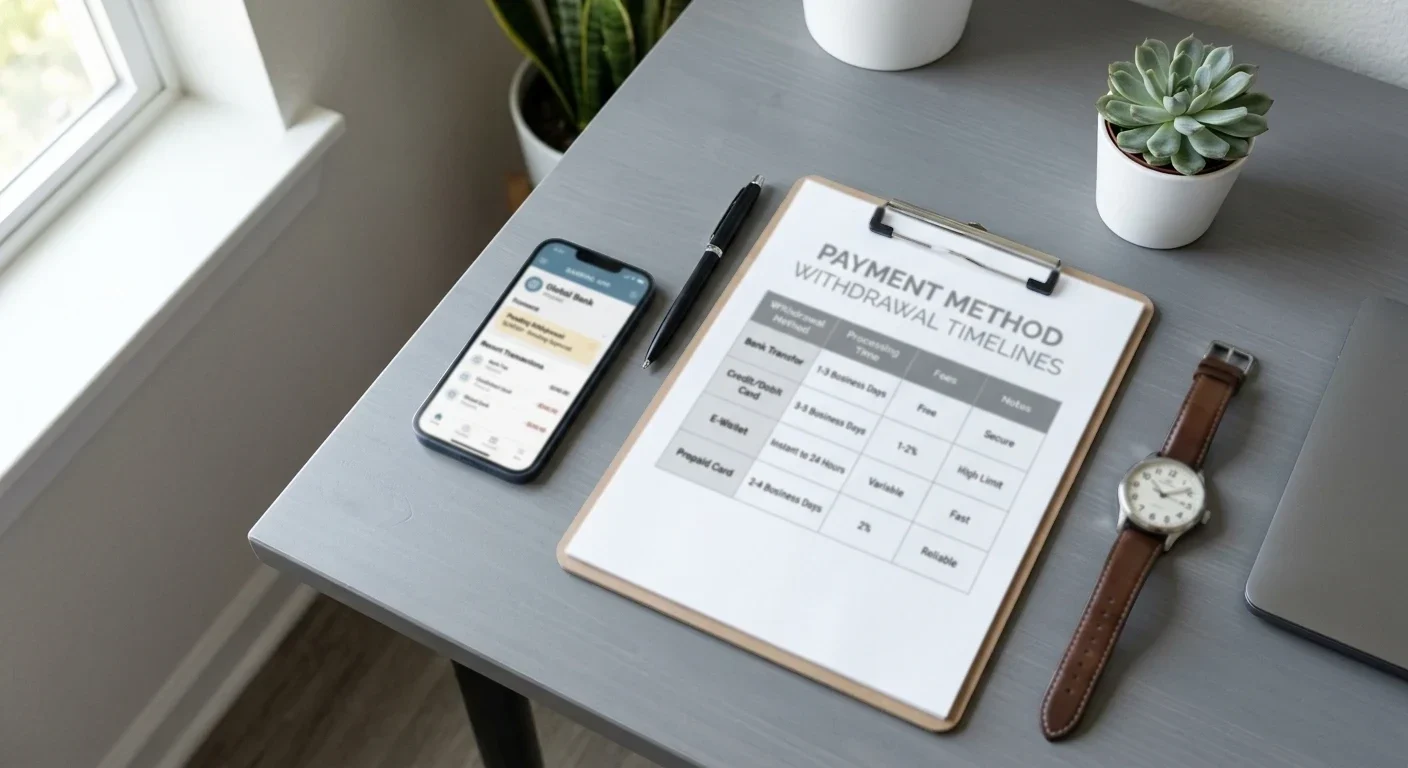
Bank Transfers: OSKO, BPAY, and What Happened to POLi
Bank transfers split into three categories for Australian casino players: real-time transfers (OSKO, functionally identical to PayID), legacy bill payment (BPAY), and traditional wire transfers. A fourth category, POLi, no longer exists.
OSKO Instant Bank Transfers
OSKO is the New Payments Platform’s real-time payment service, the same infrastructure that powers PayID. The difference is addressing: PayID uses a mobile number, email, or ABN as the destination identifier; OSKO uses traditional BSB and account number.
For casino payments, OSKO and PayID are functionally identical. Instant settlement (under 60 seconds typical), 24/7 availability, bank-to-bank direct transfer, same daily limits set by your bank. If a casino lists “OSKO” as a deposit method, you’re using the NPP infrastructure with BSB/account addressing instead of a PayID.
Casino acceptance of OSKO is lower than PayID simply because PayID addressing is simpler for customers. Most casinos that accept NPP transfers promote PayID as the primary option. A handful list both PayID and OSKO; fewer list only OSKO. From the player’s side, pick whichever addressing method the casino supports — the underlying payment rails are identical.
BPAY: Still Around but Slow
BPAY launched in 1997 as an electronic bill payment system operated by BPAY Group Pty Ltd, owned by 11 major Australian banks. Over 45,000 billers are registered in the BPAY system, processing over $150 billion annually in Australia.
For casino payments, BPAY is obsolete. Processing takes 1–2 business days. The casino provides a biller code and reference number; you initiate the payment through your bank’s BPAY section. The payment processes during business hours only, not weekends or public holidays. Once the casino receives the BPAY payment (1–2 days later), your account is credited.
Why would anyone use BPAY in 2026 when PayID settles instantly? Two scenarios: the player’s bank doesn’t support NPP (rare but possible at small regional banks), or the casino doesn’t accept PayID but does accept BPAY (also rare). Outside these edge cases, BPAY has no advantage. Withdrawal via BPAY takes another 1–2 business days.
Casino acceptance of BPAY declined from around 50% of offshore operators in 2020 to 10–20% as of 2026. Operators dropped BPAY in favour of PayID as Australian players migrated to the faster option. If a casino still accepts BPAY, expect minimum deposits around A$20–$50 (higher than PayID minimums) and no fee from the casino side.
POLi Shutdown: What Replaced It
POLi was an instant bank transfer service that used screen-scraping technology to automate bank logins. You selected POLi at the casino cashier, were redirected to POLi’s site, logged into your online banking through POLi’s interface, and POLi executed the transfer on your behalf. Deposits were instant, no need to manually copy BSB/account details.
The technology was convenient but controversial. Banks objected to third-party services asking customers to enter banking credentials outside the bank’s own site. Security researchers flagged screen-scraping as a liability risk. POLi’s operator, Centricom, faced mounting pressure from banks and regulators.
POLi shut down permanently in 2022. Centricom ceased operations, the POLi website went offline, and the service disappeared entirely. Any casino payment guide still listing POLi as an active option for Australian players is outdated — if you see a casino claiming to accept POLi in 2026, the information is stale or the casino hasn’t updated its payment pages.
PayID replaced POLi functionally. Both offered instant bank-to-bank transfers without manually entering BSB and account numbers. PayID uses a phone number or email as the address; POLi used screen-scraping. PayID is bank-sanctioned infrastructure; POLi was tolerated grudgingly. When POLi shut down, Australian casino players migrated to PayID without losing the instant-transfer convenience.
Traditional Wire Transfers for Large Withdrawals
Traditional wire transfers (also called bank transfers or telegraphic transfers) remain an option for large casino withdrawals, though processing is slow. The casino sends funds from its bank account to your Australian bank account via SWIFT or correspondent banking networks.
Wire transfer deposits take 1–3 business days to reach the casino. Wire transfer withdrawals take 1–5 business days to reach your account, sometimes longer if the casino’s bank is in a different country and the transfer crosses multiple correspondent banks. International wire transfers may incur fees from intermediary banks — $10–$30 per transfer is common, though some Australian banks waive incoming wire fees.
Wire transfers make sense for large withdrawals (over $10,000) where you prioritise security and don’t mind the wait. For smaller amounts or faster payouts, PayID, e-wallets, or crypto are better choices.
Withdrawal Speeds: Fastest Payout Methods Compared
Withdrawal speed has two components: casino processing time (how long the casino takes to approve and release your payout) and payment-method transfer time (how long the payment method takes to deliver the money). Both matter.
An “instant withdrawal casino” processes your payout request within minutes, releasing the funds to the payment method quickly. Most offshore operators take 24–72 hours to process withdrawals before releasing payment. The payment method’s speed only matters after the casino approves the payout.
Fastest Methods: Crypto and PayID
Cryptocurrency withdrawals are the fastest once the casino processes them. Fast-payout casinos release crypto withdrawals within 1–2 hours; the blockchain transfer completes in 10–30 minutes after release. Total turnaround from “request withdrawal” to “crypto in wallet” often runs under two hours.
Bitcoin, Ethereum, Tether, and Litecoin all deliver comparable withdrawal speeds — under two hours typical at fast-payout operators, sometimes under 30 minutes. The bottleneck is casino processing, not blockchain speed. A casino that takes 48 hours to process your withdrawal request negates crypto’s speed advantage.
PayID withdrawals settle instantly once the casino releases the payment — same real-time transfer as deposits. If a casino processes your PayID withdrawal in two hours, the money hits your bank account two hours after you requested it. If the casino takes 48 hours to process, the money arrives 48 hours later. Same-day PayID withdrawals are achievable at fast-payout casinos; expect under-4-hour turnaround from request to bank account at the quickest operators.
E-Wallet Withdrawal Times
E-wallets (MiFinity, Jeton, eZeeWallet) process withdrawals faster than cards or bank wires but slower than crypto or PayID. Once the casino releases the withdrawal, the e-wallet transfer completes within 24 hours, often within a few hours.
Total turnaround from request to e-wallet balance landing: under 24 hours at fast-payout casinos, 1–3 days at slower operators. Once in your e-wallet, moving money to your bank account adds another 1–3 business days depending on the e-wallet provider.
E-wallets sit between crypto/PayID (fastest) and cards/wires (slowest). If you already use an e-wallet for deposits, withdrawing to the same e-wallet is convenient and reasonably fast.
Card and Bank Transfer Speeds
Card withdrawals (Visa, Mastercard) take 2–5 business days once the casino processes them. The casino releases the funds to the card network; the card network processes the refund; your bank posts the credit. Weekend and public holiday delays extend timelines. Expect the full 5 business days at slower casinos.
Traditional wire transfers take 1–5 business days after casino processing, depending on the banks involved and whether the transfer is domestic or international. BPAY withdrawals take 1–2 business days.
Cards and wires are the slowest withdrawal methods available to Australian players in 2026. Use them only if faster options aren’t available or if you’re withdrawing a large amount where speed is less important than having everything in one bank account.
Casino Processing Time vs. Payment Method Speed
Casino processing time is the period between requesting a withdrawal and the casino releasing the payment. This is operator policy, not payment-method limitation. Fast-payout casinos process withdrawals in under 4 hours. Average operators take 24–48 hours. Slow operators take 72 hours or longer.
Payment-method transfer time is how long the payment method takes to deliver money after the casino releases it. Crypto and PayID transfer instantly or within minutes. E-wallets transfer within hours. Cards and wires take days.
When comparing casinos, ask: how long does this operator take to process withdrawals? A casino that processes crypto withdrawals in 30 minutes delivers faster payouts than a casino that takes 48 hours to process PayID withdrawals, even though PayID’s transfer time is faster than crypto’s.
Check operator reviews and terms for processing timeframes. Casinos advertising “instant withdrawals” should process within hours, not days. If an operator consistently delays processing beyond stated timelines, that’s a red flag.
| Payment Method | Transfer Time After Casino Processes | Fastest Operator Turnaround | Typical Operator Turnaround |
|---|---|---|---|
| Cryptocurrency (BTC/ETH/USDT/LTC) | 10–30 min | Under 2h | 24–48h |
| PayID / OSKO | Under 60 seconds | Under 4h | 24–72h |
| E-wallets (MiFinity/Jeton/eZeeWallet) | 1–24h | Under 24h | 1–3 days |
| Debit cards (Visa/Mastercard) | 2–5 business days | 2–3 days | 3–7 days |
| BPAY | 1–2 business days | 1–2 days | 2–4 days |
| Wire transfer | 1–5 business days | 3–5 days | 5–10 days |
How long does a typical casino withdrawal take in Australia?
Typical turnaround is 24–72 hours at average offshore casinos. Fast-payout operators process crypto and PayID withdrawals in under 4 hours total. Slow operators take 3–7 days for any method. Casino processing time (operator policy) matters more than payment-method speed. Check operator reviews for actual processing timeframes before depositing.

KYC, Verification, and First Withdrawal Requirements
Every offshore casino requires identity verification before processing your first withdrawal. This is Know Your Customer (KYC) compliance, mandated by gambling licenses and anti-money-laundering regulations. The casino asks for documents proving your identity, address, and sometimes your payment method.
The timing catches players off-guard. You deposit and play without verification. When you request your first withdrawal, the casino triggers KYC. Until you upload documents and they’re approved, your withdrawal sits in pending status. Processing times range from minutes (rare) to days or weeks (slow operators with understaffed compliance teams).
Upload your documents immediately after registering, before you deposit. Verified accounts see withdrawals processed in normal timeframes from the first payout. Unverified accounts wait for document approval every time, delaying the first withdrawal significantly.
Why do I need to verify my identity before my first withdrawal?
Casinos are required by their gambling licenses and AML/CTF regulations to verify customer identity before processing withdrawals. This prevents money laundering, underage gambling, and fraud. Verification happens once. Upload photo ID and proof of address immediately after registration to avoid delays on your first withdrawal.
Standard KYC documents are photo ID (passport, driver’s license, national ID card) and proof of address (utility bill, bank statement, government letter dated within the past 3 months showing your name and residential address). Some casinos also request proof of payment method — a screenshot or photo of the card (first six and last four digits visible, middle digits hidden) or bank statement showing your name and account number for bank transfers.
Method-specific KYC intensity varies. Voucher deposits (Neosurf, paysafecard) trigger stricter verification because the deposit was anonymous. The casino doesn’t know who bought the voucher; they need to verify who’s withdrawing. Crypto deposits often require less documentation upfront but may trigger additional checks for large withdrawals. Card and PayID deposits fall in the middle — standard KYC applies.
Can I withdraw using a different payment method than I deposited with?
Sometimes. Many casinos require you to withdraw via the same method you deposited with, up to the deposit amount. This is an AML requirement. If you deposited $500 via card and won $1,500, the casino refunds $500 to your card and asks for a different method (PayID, e-wallet, crypto) for the remaining $1,000. Some casinos allow method switching immediately after verifying both methods. Check the casino’s withdrawal terms before depositing if you plan to withdraw via a different method.
Deposit Limits and Fees by Payment Method
Minimum deposits vary by payment method and operator. PayID and card minimums typically start at A$10–$20. E-wallets range A$10–$25. Prepaid vouchers match the smallest denomination (A$10 for Neosurf, A$15 for paysafecard). Cryptocurrency minimums vary by coin and exchange rate — 0.001 BTC (~$100 AUD), 0.01 ETH (~$40 AUD), $10–$20 USDT, 0.1 LTC (~$10–$15 AUD) are common.
Maximum deposits per transaction vary widely. PayID caps depend on your bank’s daily transfer limit (A$1,000–$10,000 typical). Cards often cap at A$5,000–$10,000 per transaction. E-wallets and crypto deposits have higher or no caps depending on the casino. Check the casino’s deposit limits before attempting large deposits.
Fees depend on the payment method. PayID deposits are fee-free from both casino and bank sides (though your bank’s daily transfer limit applies). Card deposits are usually fee-free from the casino, but your bank may charge a 1–3% international transaction fee if the casino processes in a foreign currency. E-wallets are fee-free for deposits in most cases, though currency conversion fees apply if you hold a non-AUD balance. Vouchers charge a 4–7% purchase fee at the retailer; the casino doesn’t add a fee on top. Crypto deposits charge only blockchain network fees ($1–$50+ depending on coin and congestion); the casino doesn’t charge a deposit fee.
Withdrawal fees follow similar patterns. PayID, e-wallets, and crypto withdrawals are usually fee-free from the casino side (you pay only network fees for crypto). Card withdrawals may incur a small fee from the casino ($2–$5 common) plus your bank’s international fee. Wire transfers may incur fees from intermediary banks ($10–$30).
| Payment Method | Typical Casino Fee (Deposit) | Bank/Network/Purchase Fee | Total Player Cost |
|---|---|---|---|
| PayID / OSKO | $0 | $0 | $0 |
| Visa / Mastercard debit | $0 | 0–3% (international fee if applicable) | 0–3% |
| MiFinity / Jeton / eZeeWallet | $0 | 0–3% (currency conversion if applicable) | 0–3% |
| Neosurf / paysafecard | $0 | 4–7% (purchase fee at retailer) | 4–7% |
| Cryptocurrency | $0 | $1–$50+ (network fee, varies by coin/congestion) | $1–$50+ |
| BPAY | $0 | $0 | $0 |
| Wire transfer | $0–$10 | $10–$30 (intermediary banks) | $10–$40 |
Do I have to pay fees when depositing or withdrawing at online casinos?
Most methods charge zero casino-side fees. PayID, cards, and e-wallets are typically fee-free from the casino. You pay network fees for crypto ($1–$50+ depending on coin), purchase fees for vouchers (4–7%), and potentially bank international transaction fees for cards (1–3%). Withdrawal fees are similar. Check the casino’s fee schedule and your payment provider’s terms before transacting.
Apple Pay and Google Pay: Limited Casino Acceptance
Apple Pay and Google Pay are widely used mobile wallets for retail payments in Australia. Over 60% of Australian iPhone users have Apple Pay enabled; Google Pay has comparable penetration among Android users. Both launched in Australia in 2015–2016 and work at millions of retail merchants.
Casino acceptance is a different story. Under 20% of offshore casinos serving Australian players accept Apple Pay or Google Pay as of 2026. The limitation sits with merchant category code 7995 (gambling) restrictions and payment processor reluctance, not with Apple or Google’s technology.
Apple Pay and Google Pay function as card proxies. They tokenize your linked debit or credit card and pass the transaction to the card network (Visa, Mastercard). When a casino accepts Apple Pay, you’re still making a card transaction — Apple Pay just handles the authorisation. This means the same bank-side gambling blocks that affect Visa and Mastercard cards also affect Apple Pay and Google Pay. If your bank blocks gambling transactions on your card, Apple Pay deposits will fail even at the rare casinos that accept it.
Deposits via Apple Pay or Google Pay are instant when they work. Withdrawals are not supported — you cannot withdraw casino winnings to Apple Pay or Google Pay. The casino would refund to the underlying card instead.
The “limited acceptance despite consumer popularity” disconnect frustrates players. You can use Apple Pay at Woolworths, Coles, petrol stations, and restaurants, but not at most offshore casinos. Payment processors serving offshore gambling are cautious about adding mobile wallet support because of chargeback risk and bank restrictions. Until processor attitudes shift or gambling merchant codes are handled differently, Apple Pay and Google Pay will remain niche options for Australian casino deposits.
How to Choose the Right Payment Method
No single payment method is best for every player. The right choice depends on your priorities: speed, privacy, fees, ease of use, or withdrawal support.
Choose for Speed: PayID and Crypto
If you want the fastest deposits and withdrawals, narrow your options to PayID and cryptocurrency. PayID deposits land in under 60 seconds; withdrawals hit your bank account the same day at fast-payout casinos (under 4 hours total turnaround common). Crypto deposits take 5–30 minutes depending on the coin; withdrawals often complete in under two hours total.
Between PayID and crypto, PayID is simpler for most Australian players. No wallet setup, no network fees, no exchange-rate risk. Crypto is faster at the slowest casinos (because even a slow casino processing crypto in 48 hours is still faster than a slow casino processing card withdrawals in 5+ days), and crypto works when your bank blocks gambling transactions. Pick PayID if simplicity matters; pick crypto if you’re comfortable with wallets and exchanges.
Choose for Privacy: Vouchers and Crypto
If you want to limit your gambling footprint in your banking history, use prepaid vouchers (Neosurf, paysafecard) or cryptocurrency. Vouchers let you pay cash at a retailer, receive a PIN, and deposit without sharing bank details. Crypto lets you fund a casino from a wallet without your bank seeing a casino transaction.
The privacy trade-off: vouchers are deposit-only, so you’ll need a second method for withdrawals (and KYC verification happens at withdrawal, negating deposit anonymity). Crypto offers privacy on both deposit and withdrawal but requires wallet management and exposes you to price volatility (or stablecoin reliance if volatility bothers you).
Neither method is fully anonymous. Casinos require KYC before the first withdrawal. Australian exchanges require identity verification to convert crypto to AUD. Privacy-focused methods reduce your banking footprint but don’t eliminate identity verification at the casino level.
Choose for Familiarity: Cards
If you want the simplest, most familiar option and your bank hasn’t blocked gambling transactions, use a Visa or Mastercard debit card. Instant deposits, no new accounts to open, no wallet setup, no voucher hunting. The method you already use for everything else.
The downsides: growing bank restrictions (NAB blocks by default; other banks offer opt-in blocks), slower withdrawals (2–5 business days), and potential international transaction fees. Cards work best for occasional players making small deposits who don’t prioritise withdrawal speed.
Choose for Budget Control: Neosurf
If you want hard-capped gambling spend, buy a Neosurf voucher for the exact amount you’re willing to lose. Once the voucher balance is gone, you physically cannot deposit more without leaving your house, driving to a retailer, and buying another voucher. This friction is a feature, not a bug.
The 4–5% purchase fee is the cost of that control. You’ll need a different withdrawal method, and KYC will be stricter, but if preventing overspending is your priority, vouchers deliver.
Matching Deposit and Withdrawal Methods
Many casinos require you to withdraw via the same method you deposited with (up to the deposit amount) before switching to another method for the remaining balance. This is an anti-money-laundering requirement. If you deposit $500 via PayID, the casino may require you to withdraw at least $500 back to PayID before allowing crypto or e-wallet withdrawals for additional winnings.
Check the casino’s terms before depositing. If you plan to withdraw via a different method than you deposit with, verify the casino allows method switching and understand the conditions. Some operators are flexible; others enforce same-method withdrawals strictly.
Depositing and withdrawing via the same method also simplifies verification. The casino sees one payment method, verifies it once, and processes payouts faster. Mixed-method transactions trigger additional KYC scrutiny.
Crypto Casino Australia 2026 — Bitcoin, Ethereum, Solana, USDT
Content created by the «AussiePay» team